SEDD Design Pre Approval
 Sharjah Municipality Parking Reservation Approval
 RTA Pre Approval
 Government of Ajman
 DESIGN & APPROVAL
 OUTDOOR & INDOOR BRANDING
 SIGNAGES
 VEHICLE BRANDING
 FLAGS & BANNERS
 OTHER SERVICES
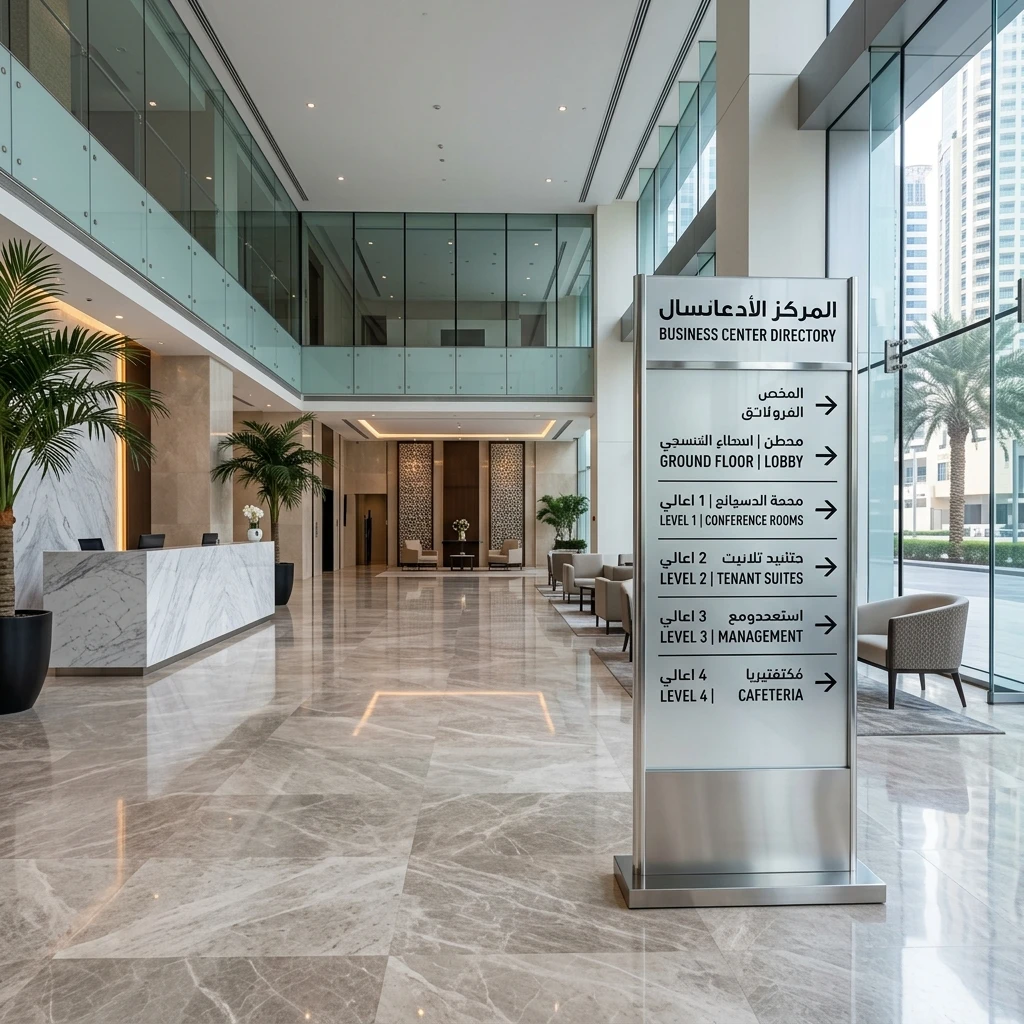
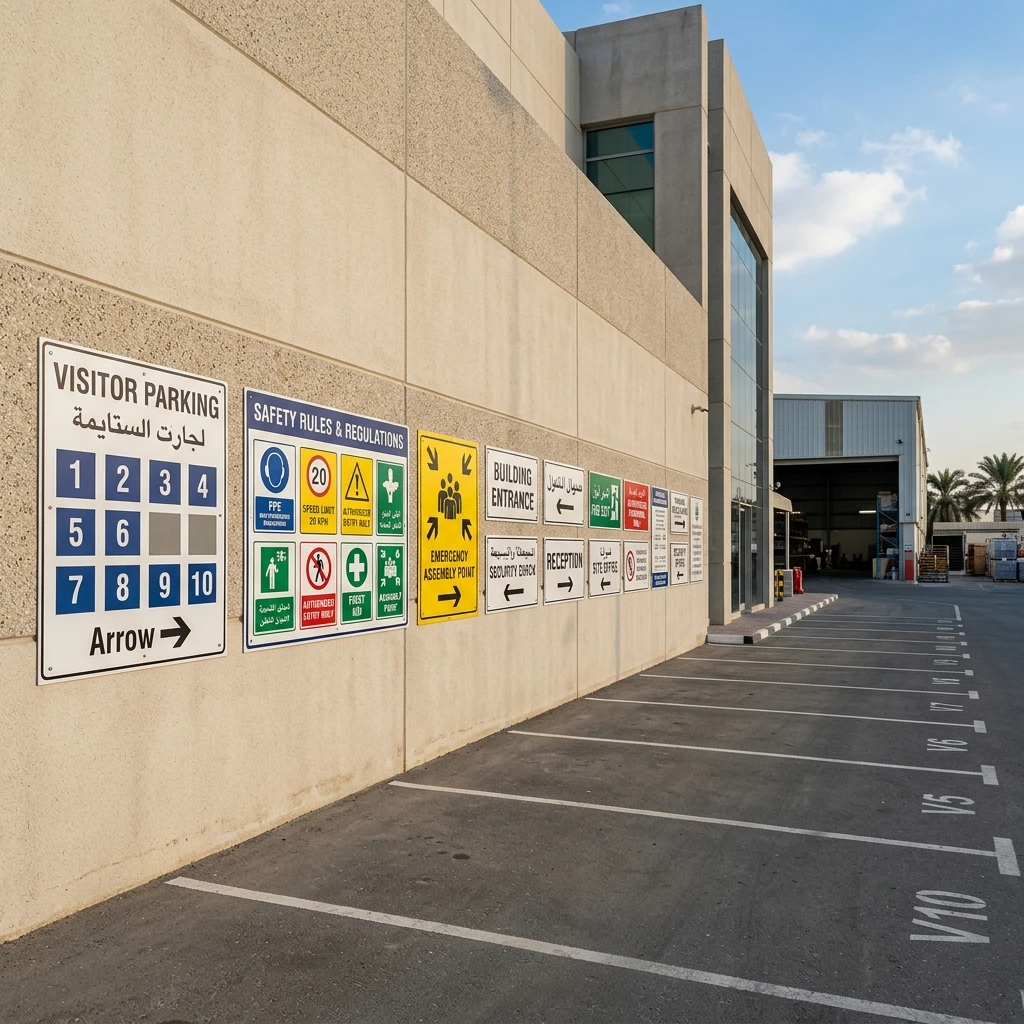
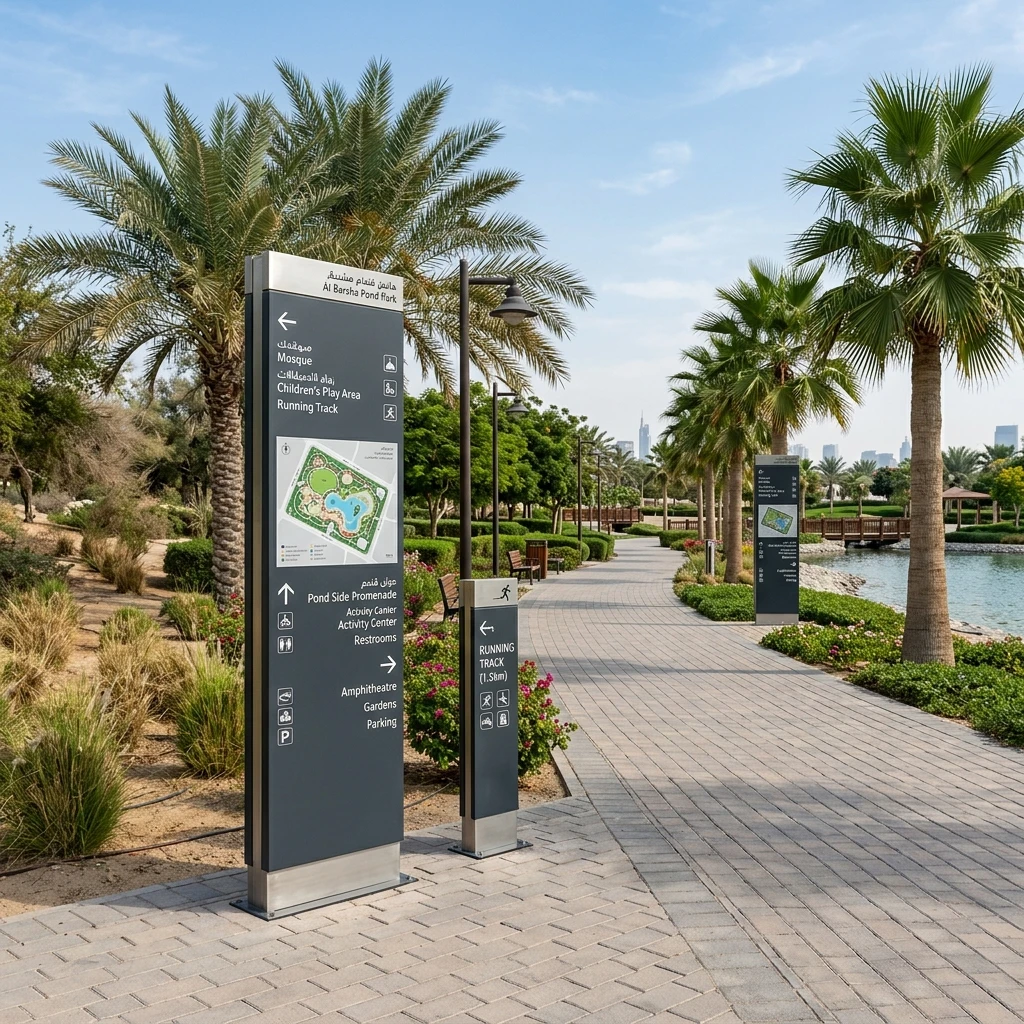
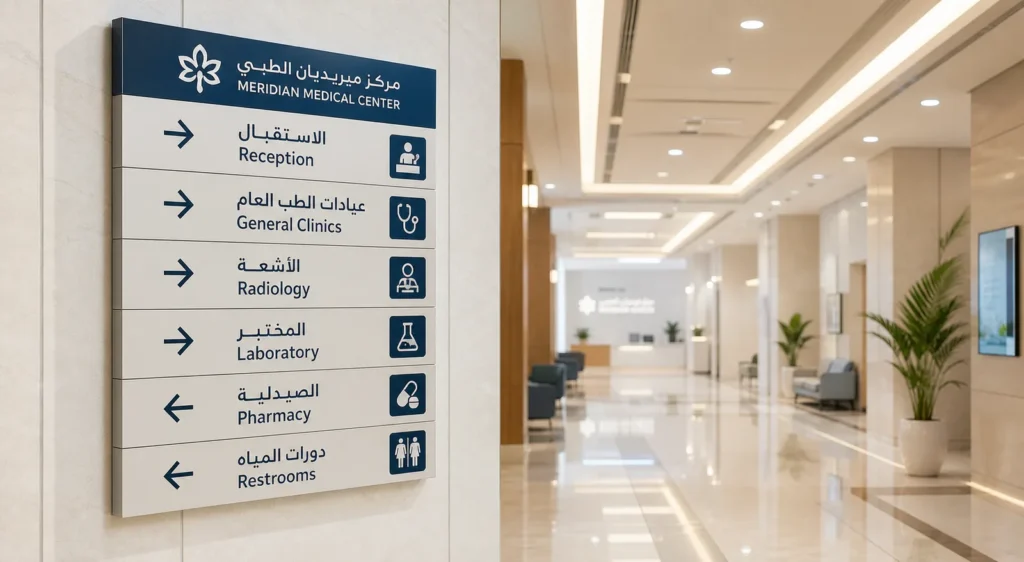
Directional signage guides people to a specific destination using arrows and short, clear labels, answering the single question of which way to go. K.A.T SIGNS designs, produces and installs directional signage across Sharjah, Dubai, Ajman and Abu Dhabi, in bilingual English and Arabic, to move visitors smoothly to entrances, parking, departments and facilities.
What is directional signage?
Directional signage is signage whose job is to point the way, combining an arrow with a concise destination label so a visitor makes the next decision instantly. It is the action layer of navigation, placed at decision points such as junctions, lobbies, corridors and car-park entries. Unlike a directory that lists everything, a directional sign shows only the routes relevant at that exact spot, which keeps decisions quick and reduces confusion.
- Arrow signs at corridor and road junctions
- Parking and entrance direction signs
- Department and floor direction plates
- Post-mounted and wall-mounted directional signs
- External vehicle and pedestrian direction signs
How is directional signage different from wayfinding?
Directional signage is one element within a broader wayfinding system, focused purely on pointing the way. Wayfinding is the complete navigation strategy, combining identification, directory and directional signs into a coherent journey, whereas a directional sign is the individual arrow that executes one step of that journey. In practice you can install directional signage on its own for a simple site, or as the active layer of a full wayfinding system for a complex one.
One decision per sign. The clearest directional signs limit themselves to the routes that matter at that junction. Overloading an arrow sign with every destination slows people down instead of guiding them.
Where does directional signage add the most value?
Directional signage matters most wherever visitors face a choice of routes and need a quick, confident answer. The table shows common settings and the signs that suit them.
| Setting | Directional need | Sign type |
|---|---|---|
| Office building | To reception and lifts | Wall-mounted arrow plates |
| Car park | To entry, exit and floors | Suspended and post signs |
| Retail or mall | To zones and facilities | Overhead directional signs |
| Clinic or campus | To departments | Corridor arrow signs |
| Compound entry | To visitor parking | External post-mounted signs |
Do directional signs need to be bilingual in the UAE?
Yes, directional signage in the UAE should be bilingual English and Arabic, with the Arabic no smaller than the English, so every visitor can follow the route. External directional signs on a building exterior or roadside may also need municipality or landlord approval. K.A.T SIGNS designs balanced bilingual arrow layouts and advises when an external directional sign needs sign-off before installation.
How do we plan directional signage?
Good directional signage starts with walking the visitor journey and marking every decision point.
- Walk the routes visitors and vehicles actually take
- Mark each junction where a decision is made
- Assign one clear message and arrow to each point
- Produce consistent bilingual signs in durable materials
- Install at eye or vehicle sightline height and verify the flow