SEDD Design Pre Approval
 Sharjah Municipality Parking Reservation Approval
 RTA Pre Approval
 Government of Ajman
 DESIGN & APPROVAL
 OUTDOOR & INDOOR BRANDING
 SIGNAGES
 VEHICLE BRANDING
 FLAGS & BANNERS
 OTHER SERVICES
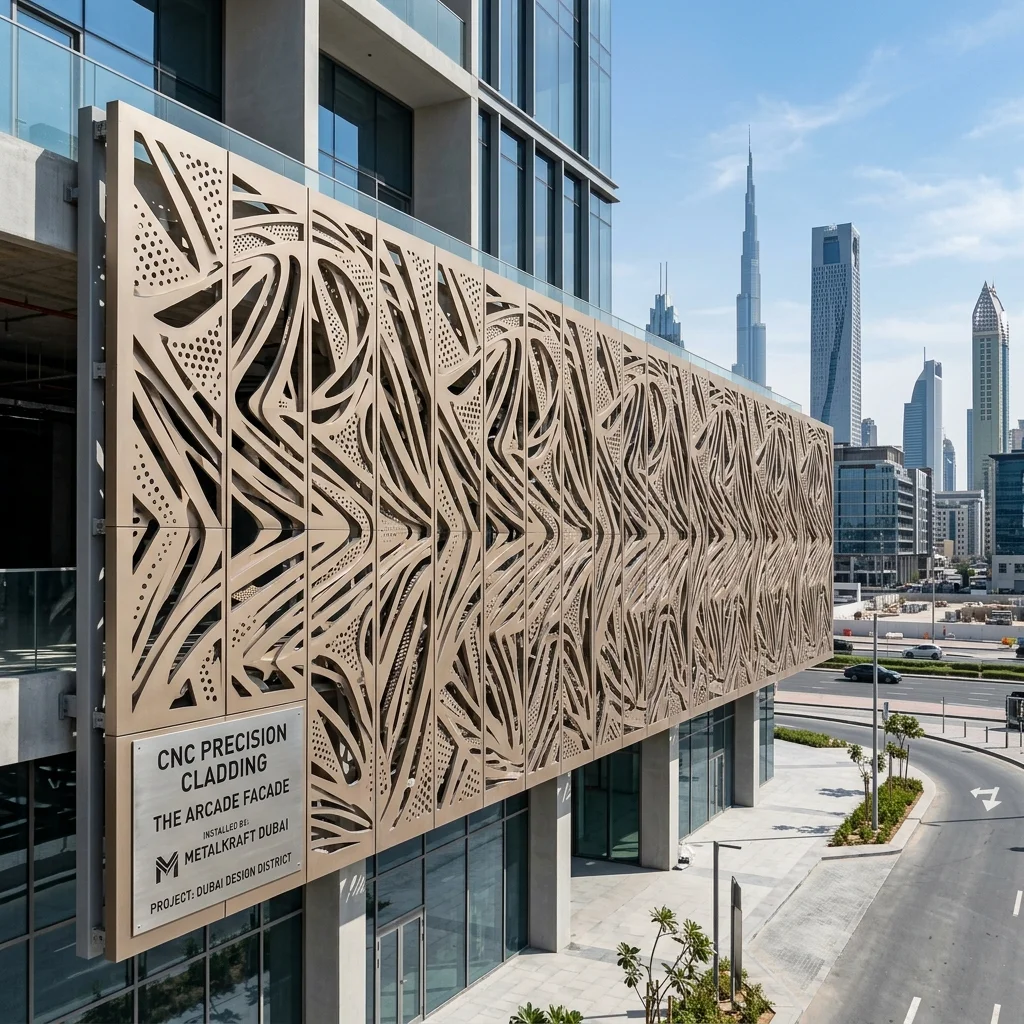
CNC cutting is how flat sheet becomes a precise, repeatable 3D letter, logo or shape. K.A.T SIGNS runs in-house CNC routing to cut acrylic, wood, metal composite and foam into signage letters, brand shapes and fabrication components across Sharjah, Dubai, Ajman and Abu Dhabi — accurate to the millimetre, with every piece in a run identical to the last. From a single logo shape to a full set of building-front letters, the cut, finish, assembly and install all happen with one team.
What is CNC cutting and what is it for?
CNC (computer numerical control) routing drives a cutting tool from a digital file, so whatever the vector artwork says, the machine cuts exactly — the same way, every time. It is the backbone of 3D signage: built-up letters, logo shapes, decorative panels, sign faces and fabrication parts all start as a CNC cut.
Because it is file-driven rather than hand-guided, a run of fifty identical letters comes out consistent, and complex shapes that would be impossible or painfully slow by hand become routine. That repeatability is exactly what you need when a building fascia calls for a row of matching letters or a brand needs the same shape reproduced across multiple sites.
Which materials can you CNC cut?
CNC handles thicker and heavier stock than most methods, which makes it the right tool for structural and dimensional work:
- Acrylic for letters, sign faces and displays.
- Wood and MDF for signage, fixtures and joinery.
- Aluminium composite and light metals for durable signs.
- Foam for lightweight props, 3D shapes and event pieces.
File-driven precision means every letter and shape is identical and repeatable — ideal for building-front lettering or a run of matching brand pieces. Material and cut quoted per project.
CNC or laser — which do I need?
They are complementary rather than competing. CNC routing suits thicker, heavier and three-dimensional material and profiling, while laser cutting gives the finest edges on thinner acrylic and highly detailed work. We choose the right machine for your material, thickness and finish, and often use both on the same project.
| Job | Material | Method |
|---|---|---|
| 3D building letters | Acrylic, composite | CNC |
| Thick wood shapes | MDF, plywood | CNC |
| Foam props | High-density foam | CNC |
| Metal profiles | Aluminium | CNC |
How does a CNC job work?
Good file preparation is what turns a logo into a clean cut, so we handle that step for you:
- Send vector artwork, or we redraw your logo into cut-ready files.
- We select the material, thickness and tooling for a clean edge.
- The router cuts and profiles each piece to the file.
- We finish, paint or assemble into 3D form and install.
How does CNC fit with your other services?
CNC feeds most of our fabrication. Cut letters that our installation team then mounts, route components for custom structures, or prep rigid panels for UV printing. Because cutting, printing and building share one workshop, parts fit together first time without back-and-forth between vendors.
How do you prepare a logo for cutting?
Clean cutting starts with clean files, and this is a step we handle for you rather than leaving to chance. CNC routing follows a vector path, so a logo supplied as a flat photo or low-resolution image cannot be cut directly — it first has to be traced or rebuilt as crisp vector artwork with the exact outlines the machine will follow. Our studio redraws your logo where needed, sets the correct sizes and spacing, and accounts for the tool width so fine details and tight corners come out as intended. That preparation is why our cut letters and shapes have clean, accurate edges instead of the ragged approximations you get from a poorly traced file.