SEDD Design Pre Approval
 Sharjah Municipality Parking Reservation Approval
 RTA Pre Approval
 Government of Ajman
 DESIGN & APPROVAL
 OUTDOOR & INDOOR BRANDING
 SIGNAGES
 VEHICLE BRANDING
 FLAGS & BANNERS
 OTHER SERVICES
Key takeaways
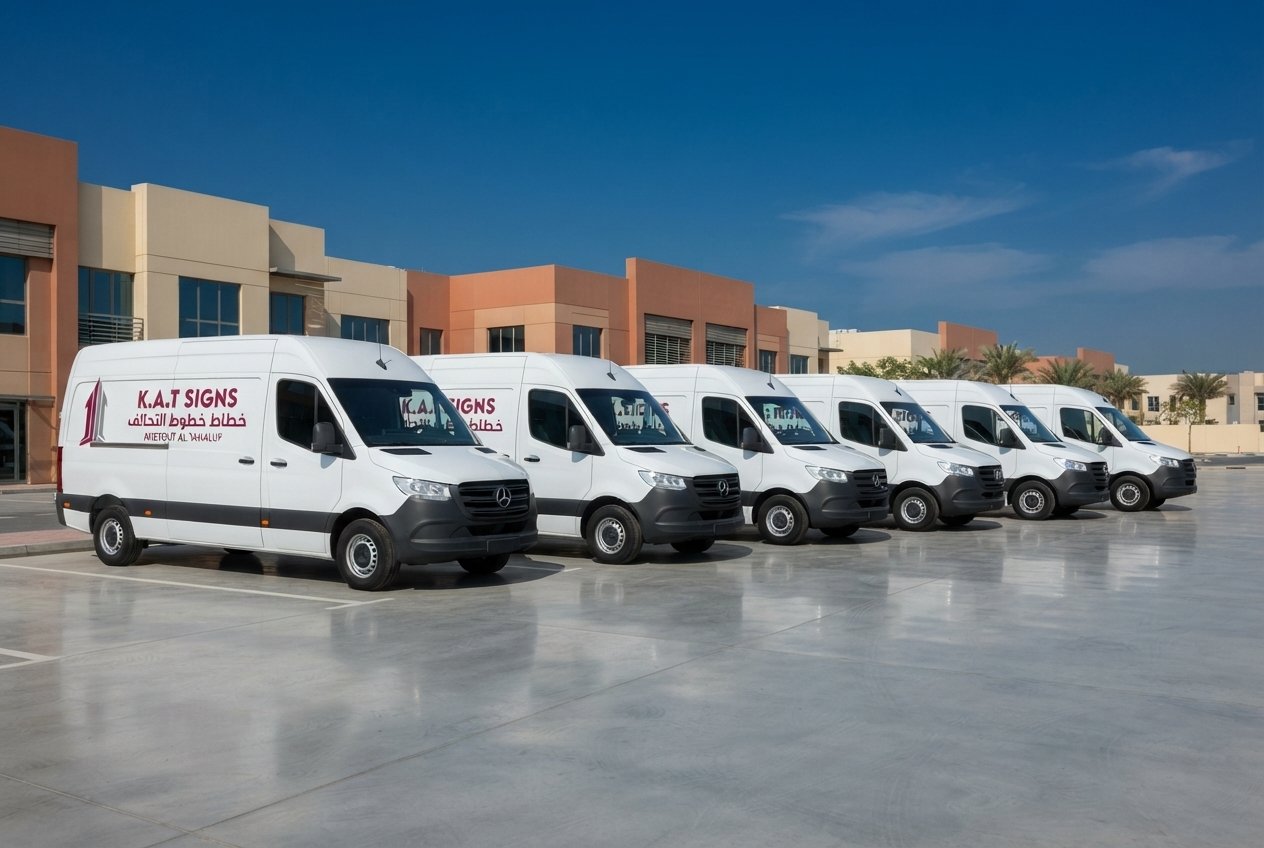
- All commercial vehicle branding in Dubai needs RTA approval — cars, vans, trucks and buses used for business.
- There are three permit types: basic logo advertisement, partial wrap and full wrap.
- The vehicle must be registered under a company name, and your Dubai Trade Licence (DED or Free Zone) must match the company on the Mulkiya.
- Design must be at least 50% Arabic, Arabic/English only, match your trade licence, and follow strict content and safety rules — branding takes 3 to 7 days to approve.
Branding a work vehicle in Dubai is not a design decision — it is a permit process. Get the paperwork and the artwork right the first time and approval is routine; get them wrong and you risk fines or impoundment.
Do I need RTA approval to brand my vehicle in Dubai?
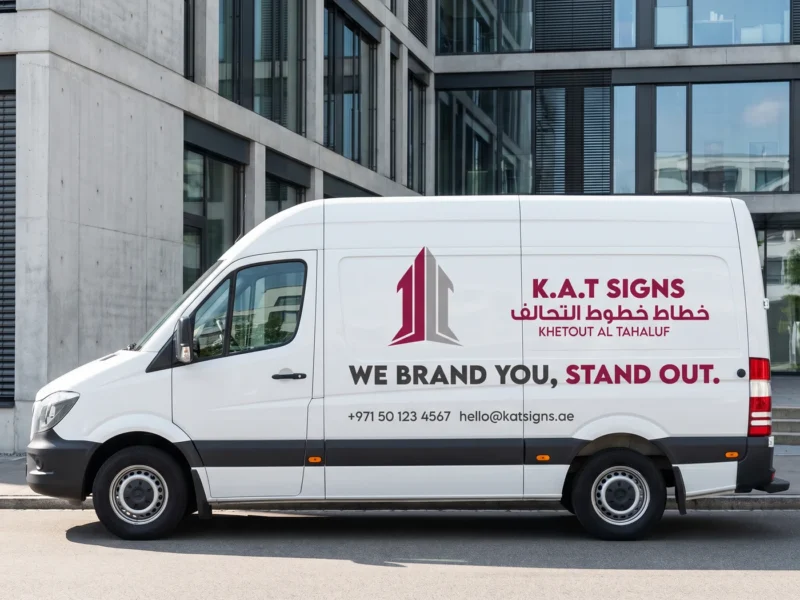
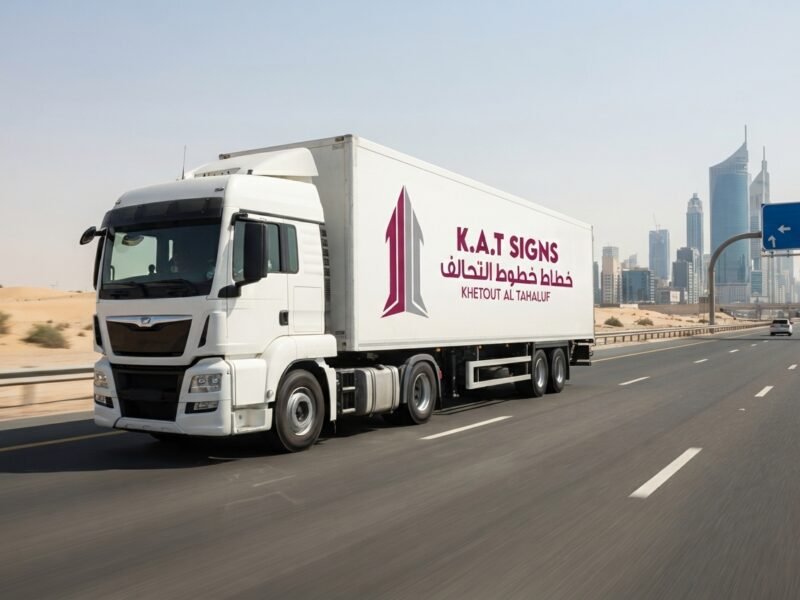
Yes — all commercial vehicle branding in Dubai requires RTA approval, and that covers cars, vans, trucks and buses used for business. It applies whether you are adding a small logo or a full colour-change wrap. The rule exists so that every branded vehicle on Dubai’s roads is registered, traceable to a licensed business, and compliant with content and safety standards. There is no informal shortcut: branding a commercial vehicle without the RTA permit exposes you to fines, penalties or vehicle impoundment. The good news is that the process is predictable when you know the permit type, the documents and the design rules — which is exactly what this guide covers.
What are the RTA vehicle branding permit types?
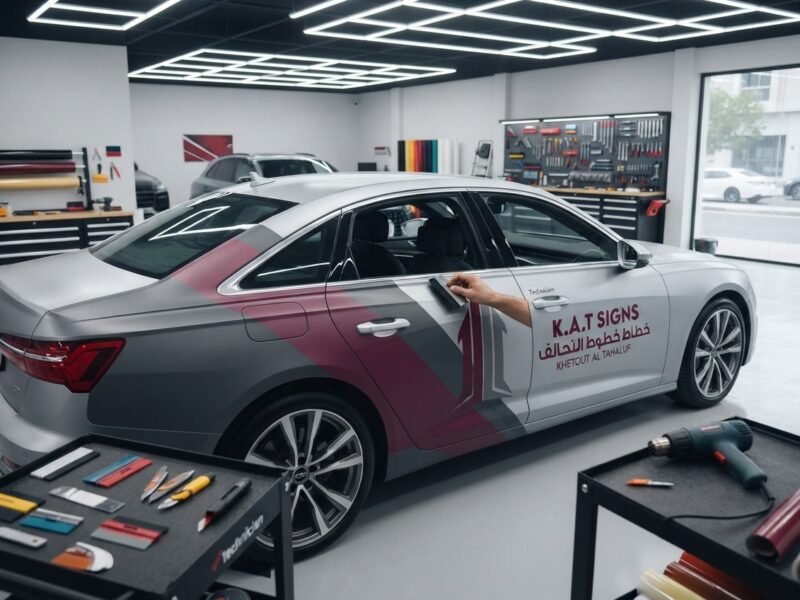
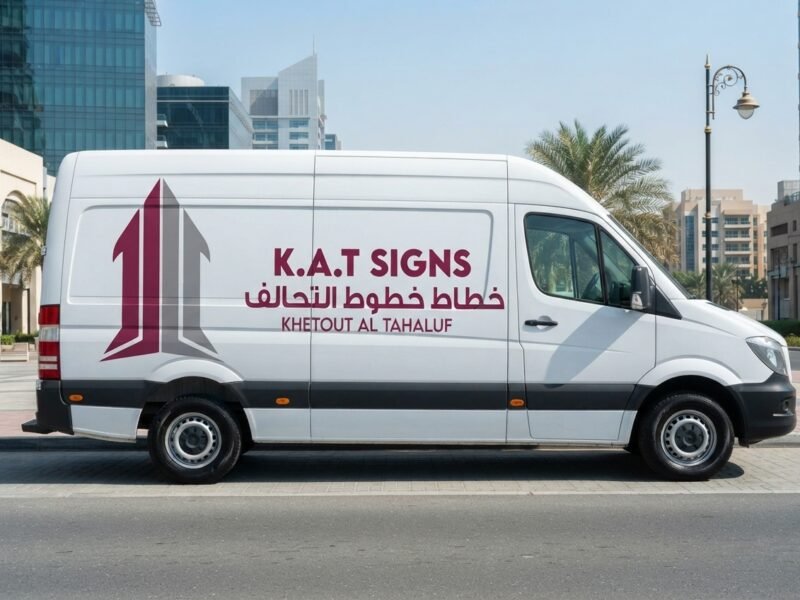
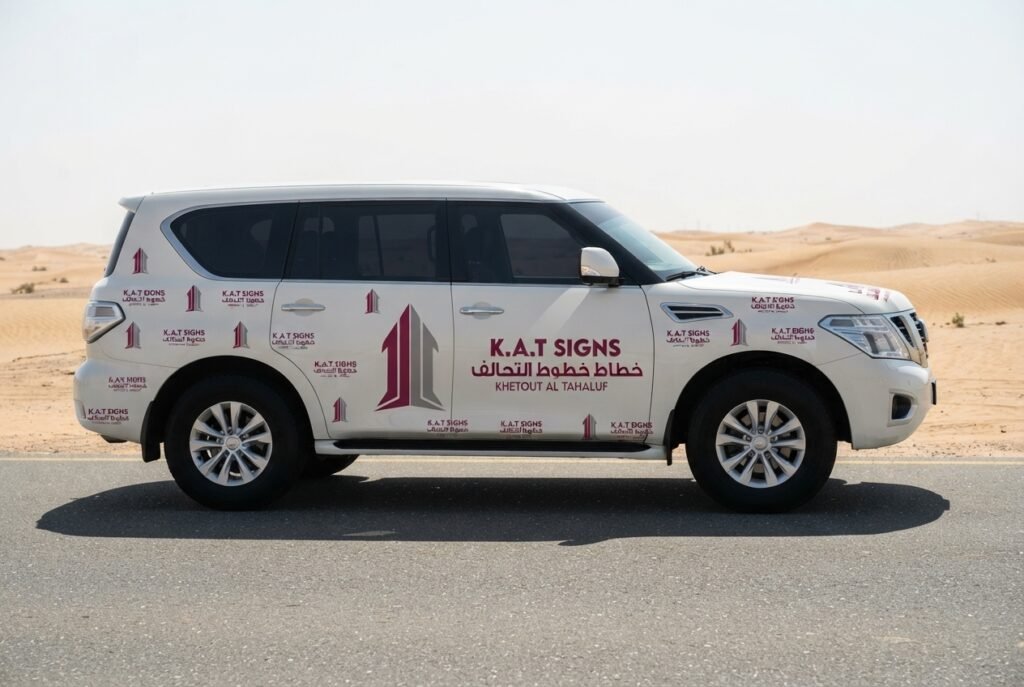
The RTA issues three permit types, matched to how much of the vehicle you are branding: a basic logo advertisement permit, a partial wrap permit, and a full wrap permit. The basic logo permit covers simple identification — a company logo, phone number and website on the doors and rear. The partial wrap permit covers a defined section of the bodywork, such as one side, the rear or the lower body. The full wrap permit covers the entire vehicle, including a base colour change. You apply for the permit that matches your coverage; if you are still deciding on coverage, our guide to full wrap vs partial wrap vs decals will help you choose before you apply.
| Permit type | Covers | Typical use |
|---|---|---|
| Basic logo advertisement | Logo, contact details, simple graphics | Identifying a work vehicle at low cost |
| Partial wrap | A defined body zone (side, rear, lower body) | Stronger branding on a mid budget |
| Full wrap | The entire body, including colour change | Turning the vehicle into a moving billboard |
What documents does the RTA require?
The core requirement is that the vehicle is registered under a company name, and your valid Dubai Trade Licence — issued by the DED or a Free Zone — matches the company on the vehicle registration, the Mulkiya. If the names do not match, the application will not proceed. In practice you will need your trade licence, the vehicle registration card (Mulkiya), and the branding artwork prepared to RTA design standards. Because the trade licence and the Mulkiya must align, a vehicle registered under an individual’s personal name cannot be branded for business until that is resolved. K.A.T SIGNS checks these details up front so the application is not rejected at the first hurdle.
What are the RTA design rules?
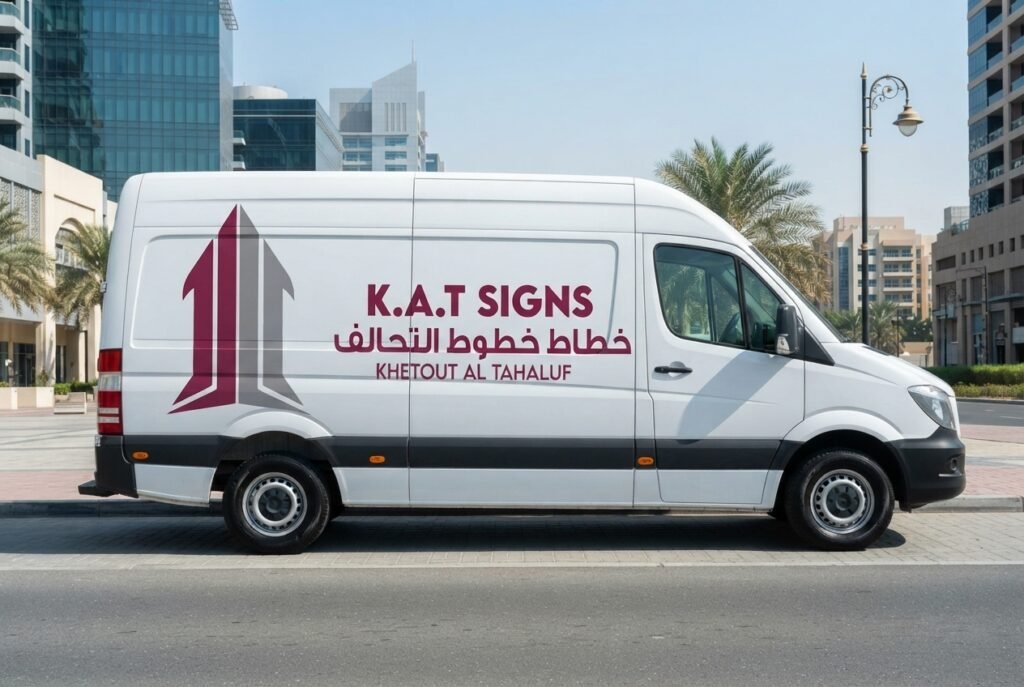
The design rules are strict and non-negotiable, so the artwork has to be built to comply from the start. The headline rules are:
- At least 50% of the text must be Arabic; only Arabic and English are allowed.
- The business name and activity must match your trade licence exactly.
- A maximum of five images per side of the vehicle.
- No real people — cartoons and graphics are fine, photographs of people are not.
- No 3D effects, QR codes or barcodes.
- No religious, political, national-flag or immoral content.
- Plates, lights and mirrors must stay unobstructed.
- No branding on the front or rear windshields or side windows — rear perforated film is sometimes allowed.
These rules are why compliant artwork is real production work, not a quick logo drop. Getting the Arabic ratio, the exact licence wording and the image count right the first time is what keeps the approval fast.
Common rejection: Artwork that covers a side window, obscures a tail light, or uses a photo of a person. These fail on safety and content grounds — design around the glass, lights and mirrors from the very first draft.
What happens if you brand without RTA approval?
Branding a commercial vehicle without RTA approval exposes your business to fines, penalties or even vehicle impoundment — and an impounded vehicle costs you far more than the time it takes to do the paperwork properly. Beyond the direct penalty, an unapproved wrap has to be removed and re-done to a compliant standard, so you effectively pay for the branding twice and lose the vehicle from service while it is corrected. There is a reputational cost too: a business caught running non-compliant livery does not look established or trustworthy to the customers it is trying to win. The rules are not arbitrary — they keep plates, lights and mirrors visible, keep the content appropriate, and keep every branded vehicle traceable to a licensed business. Treating the permit as the first step rather than an afterthought is always cheaper than fixing a rejection or a fine later, and it means the vehicle goes on the road once, correctly, and stays there earning attention instead of sitting in a compound.
How long does RTA branding approval take?
RTA branding approval typically takes 3 to 7 days once a compliant application is submitted, while a simple colour change is faster at 1 to 2 days. The timeline assumes the documents match and the artwork already follows the design rules; incomplete files or non-compliant designs restart the clock. Because the approval runs in parallel with production scheduling, the smart move is to lock the compliant artwork early, submit, and have the vinyl printing ready to go the moment the permit lands. That way the vehicle is off the road for the shortest possible time.
What is the step-by-step approval process?
The process is straightforward when you follow it in order. Here is the sequence from decision to approved, branded vehicle:
- Confirm the vehicle is registered under your company name and your trade licence matches the Mulkiya.
- Choose your coverage and the matching permit type (basic logo, partial or full wrap).
- Prepare compliant bilingual artwork — 50% Arabic, exact licence wording, within the content and safety rules.
- Submit the RTA application with the trade licence, Mulkiya and artwork.
- Wait for approval — around 1 to 2 days for a colour change, 3 to 7 days for branding.
- Print, laminate and install the approved design; keep the permit on record.
Skipping or reordering these steps is the usual cause of delays and rejections. Handled properly, the approval is routine.
The permit is not red tape you work around — it is the difference between a fleet that markets you and a fleet that gets impounded.
K.A.T SIGNS prepares compliant bilingual artwork, submits your RTA application, and produces and installs the branding in-house in Sharjah — so approval and production move together. See our vehicle branding service, understand the payback in our fleet branding ROI pillar, and before you commit a budget read how much a car wrap costs in Dubai. Ready to start? Request a free quote and permit assessment.